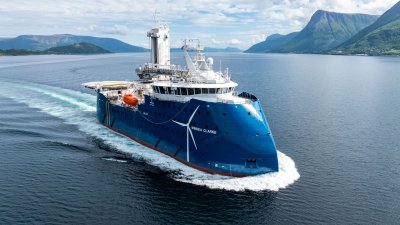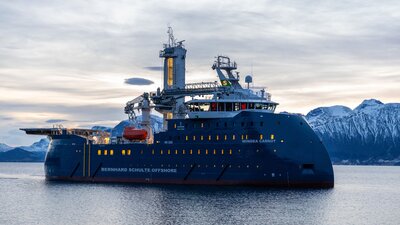
Following the success on Windea Carnot, an ice cream machine has, naturally, also been installed on Windea Clarke, the latest addition to the BS Offshore fleet.
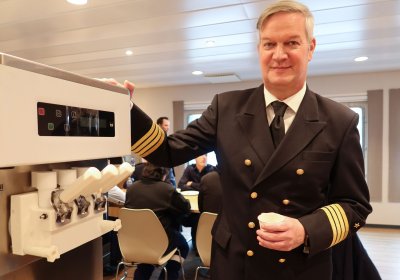
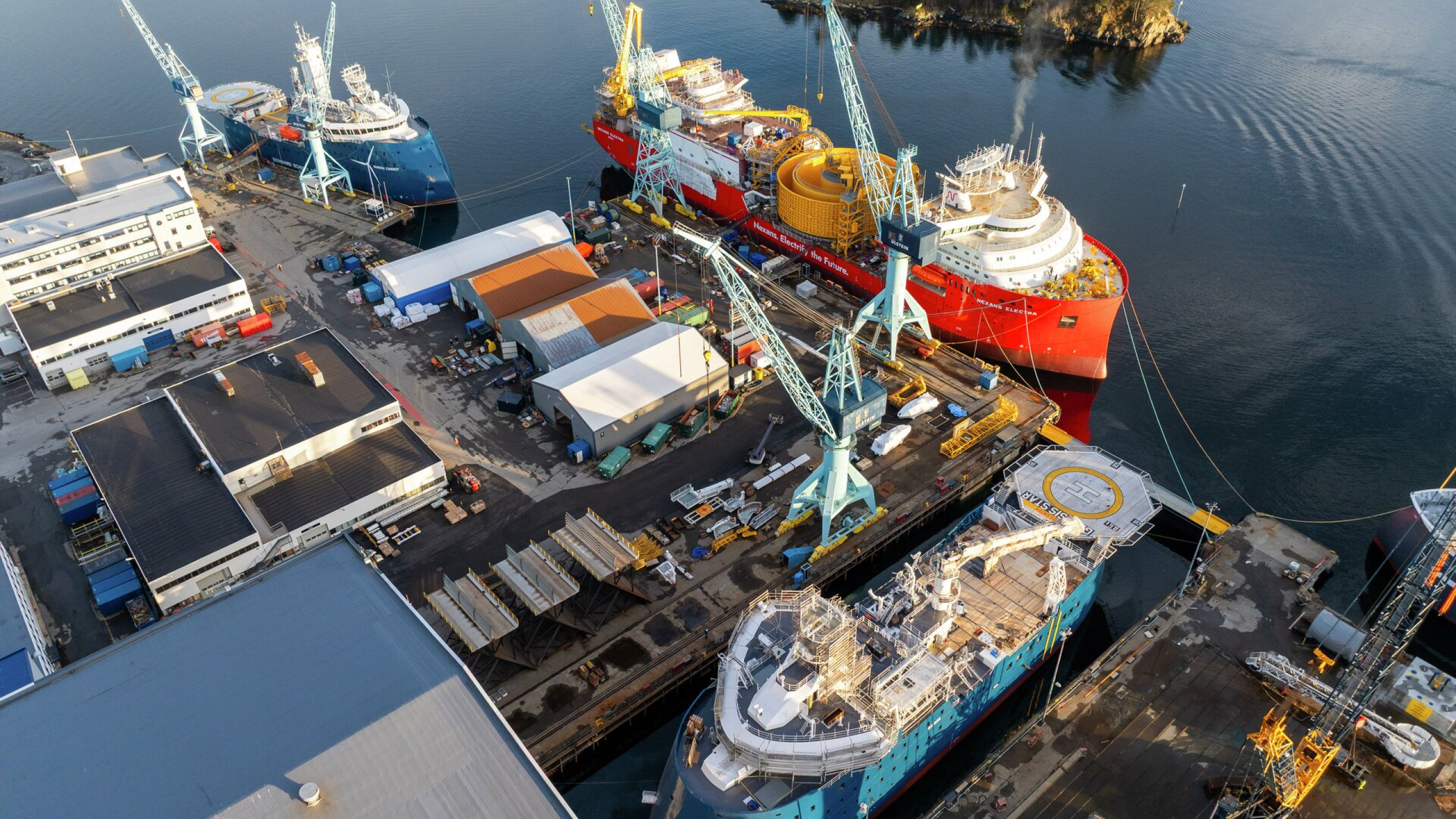
The ice cream success says a great deal about the performance of the TWIN X‑STERN® series by Ulstein Design & Solutions AS. Few are better placed to judge than Captain Rainer Müller of BS Offshore, who has overseen the takeover and entry into service of all four TWIN X‑STERN CSOVs built by Ulstein Verft. The latest delivery, Windea Clarke, will, like her sister vessel Windea Carnot, operate in a wind park in the North Sea from summer 2026.
A demanding operating environment
“If a technician becomes seasick, they are removed from duty. That impacts productivity and can ultimately affect project schedules and costs,” Müller explains.
He knows the challenge firsthand. His career at sea began at age 13, and not comfortably.
“I spent my first three days in bed with severe seasickness. At the time, I thought I was going to die,” he says. He stayed the course, later qualifying as a master mariner.
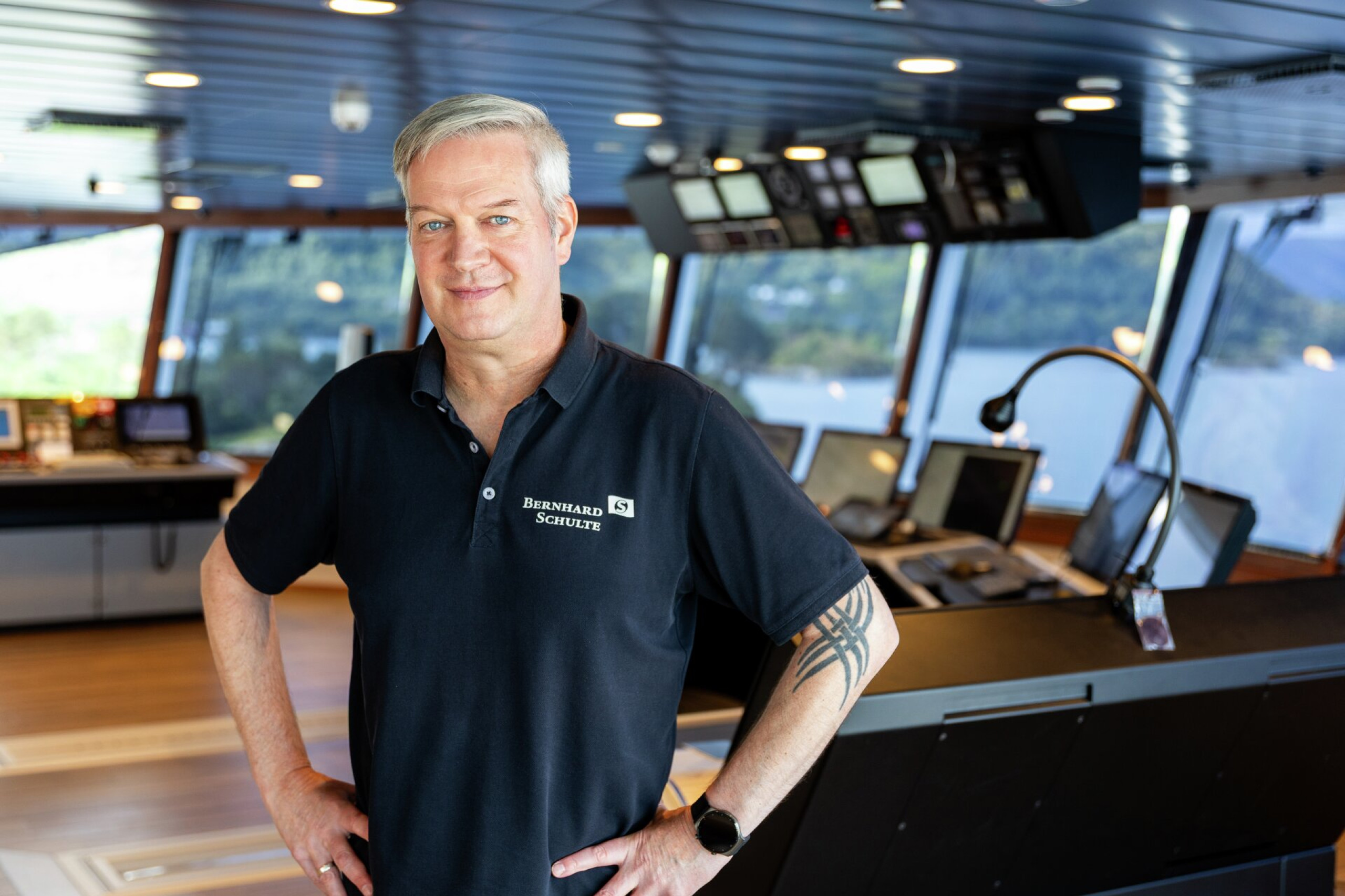
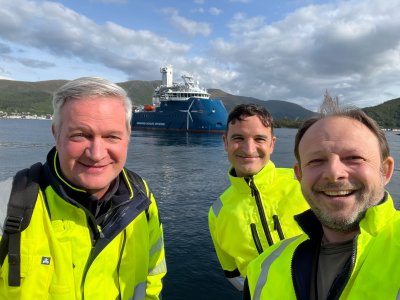
Captain Müller and team in front of one of BS Offshore's latest CSOVs from Ulstein.
“Like a four-wheel drive at sea, spot on for walk-to-work operations”
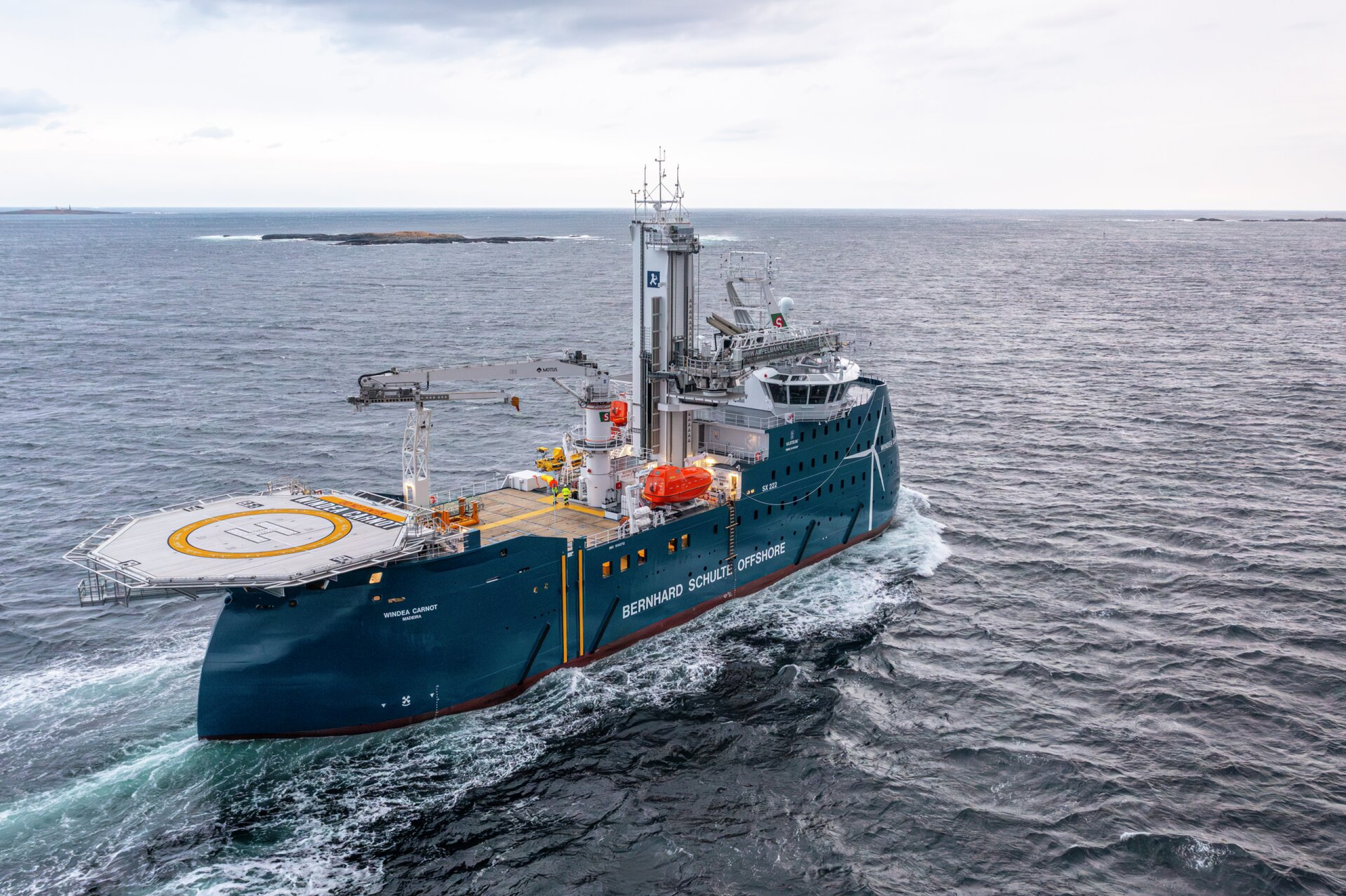
A defining feature of the TWIN X‑STERN design is its operational flexibility.
“It is spot on. With four azimuth propellers, two at each end, it’s like a four-wheel drive at sea,” says Müller.
The hull builds on the legacy of the X-BOW® and the X-STERN®, reducing slamming and vibrations in following seas. During w2w operations, Captain Müller typically positions these vessels stern-to-weather.
“This significantly reduces motion on deck and limits vertical acceleration in the accommodation areas. The result is improved onboard comfort and well-being,” he says.
System integration that works offshore
According to Müller, the strength of the ULSTEIN SX222 design lies not only in seakeeping but in how the systems work together.
“The dynamic positioning system, power management system, mission equipment and walk-to-work solution are very well integrated. That reduces troubleshooting offshore and maximises uptime.”
Purpose-designed for operations across the offshore energy segment, the vessels combine precise station-keeping with layouts optimised for safe and efficient access to installations.
Higher operability, more working days
In offshore wind, vessel capability directly determines productivity. The BS Offshore TWIN X‑STERN® vessels can operate in significant wave heights of 3.0–3.5 metres, compared to around 2.5 metres for many conventional CSOVs, without water on deck.
These vessels are in another league. They are rock-steady, and we have demonstrated safe operations even at wind speeds up to 40 knots. More stability means more transfers and more technicians working instead of waiting.
In-field transit operations benefit from the design
The Windea Clarke's sea trials showed speeds of around 12.7 knots both forward and stern-first. Even in-field transits on these CSOVs are often conducted stern-first, since this reduces motion in the living areas. The benefits extend beyond comfort: higher personnel availability, fewer disruptions, and improved overall efficiency.
Clients notice the difference - A step-change in onboard experience
Crew and technicians stay on board for weeks, making comfort and functionality essential. High-quality accommodation, efficient logistics systems, and well-designed welfare facilities all contribute to daily life on board, and even small details matter.
For Müller, crew welfare has become a key performance factor in an increasingly mature offshore energy industry, where technicians can directly compare vessel performance across projects.
“I speak with our client representatives every day and regularly ask the technicians how they feel on board and how the vessel is performing. Their observations tell us a lot. They notice the stable platform, the efficient transfer capability and the ability to continue operations in conditions where other vessels have to stop.”
Combined with efficient manoeuvring and strong dynamic positioning performance, this translates into clear commercial value: higher uptime and more predictable project execution.
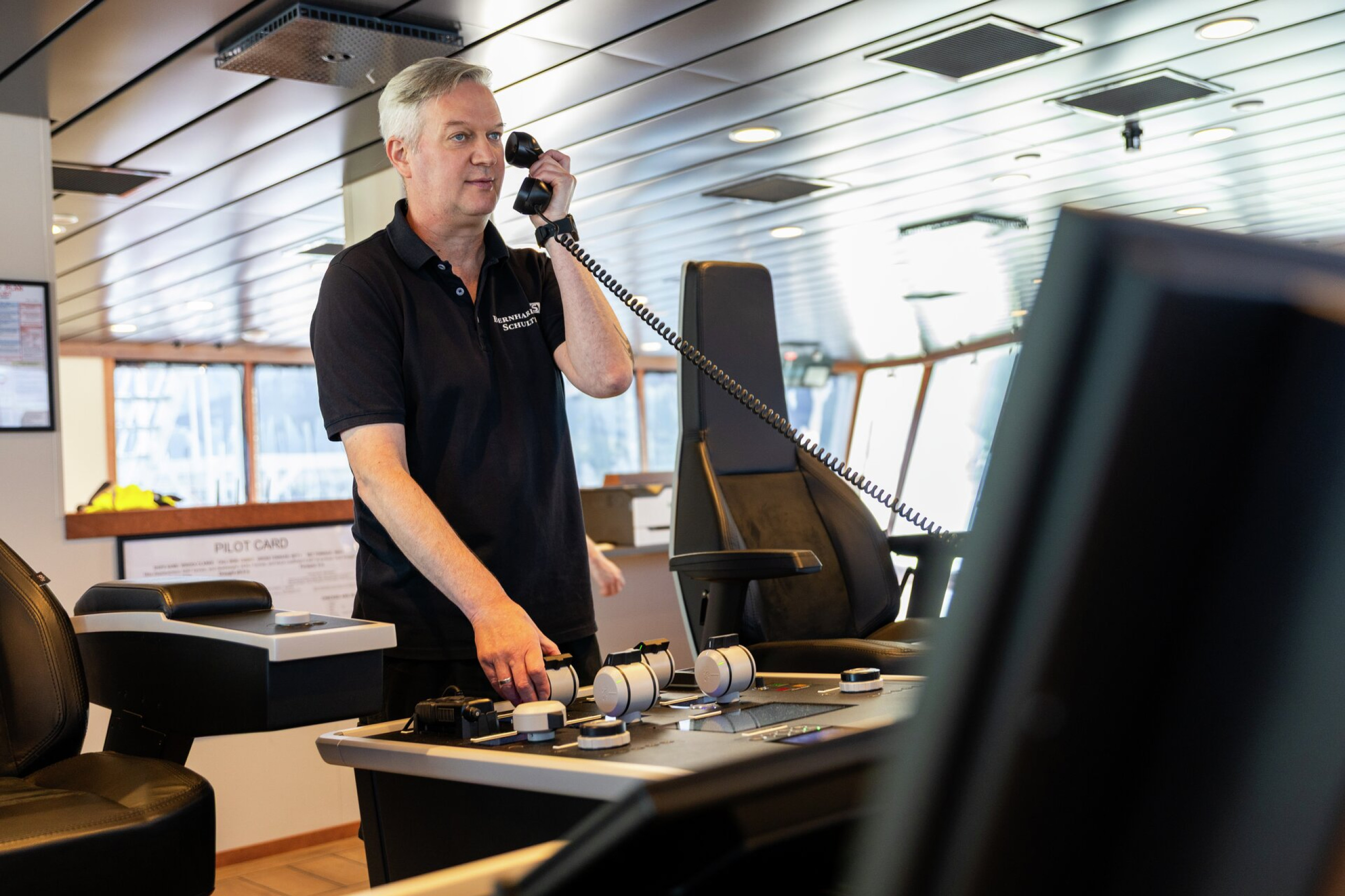
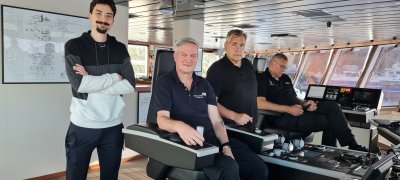
Life on the bridge of a CSOV.
Built for the future
Environmental performance is also becoming more important. The vessels combine efficient hull forms with hybrid battery systems, shore power capability and readiness for alternative fuels such as methanol.
“We use the battery energy storage system all the time. It reduces emissions,” says Müller.
Looking ahead, he sees CSOVs evolving further:
“Future vessels will act as offshore hotels, logistics hubs and digital workplaces.”
As offshore developments move farther offshore and into harsher environments, operational capability, digital connectivity and environmental performance will become even more important.
The benefit of being last in line
As the fourth vessel in the series, Windea Clarke benefits from everything learned from her predecessors.
“Every team involved has contributed to making this the strongest vessel in the series,” says Müller.
And while advanced systems and propulsion technologies are key, perhaps the clearest indicator of success is still found in the ship’s hospital. The seasickness tablets remain untouched. The ice cream machine, on the other hand, is working overtime.