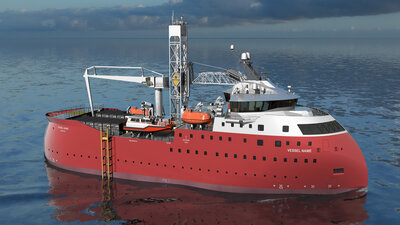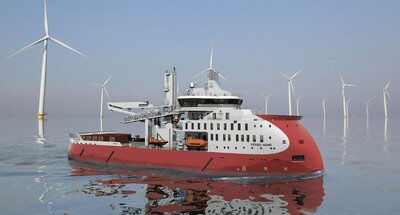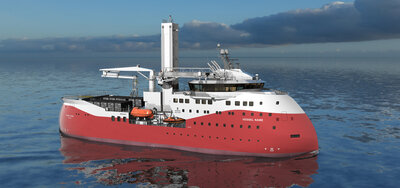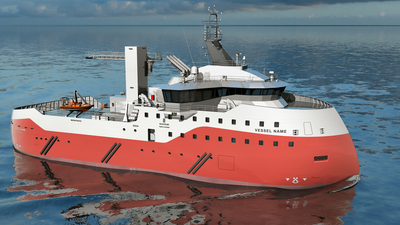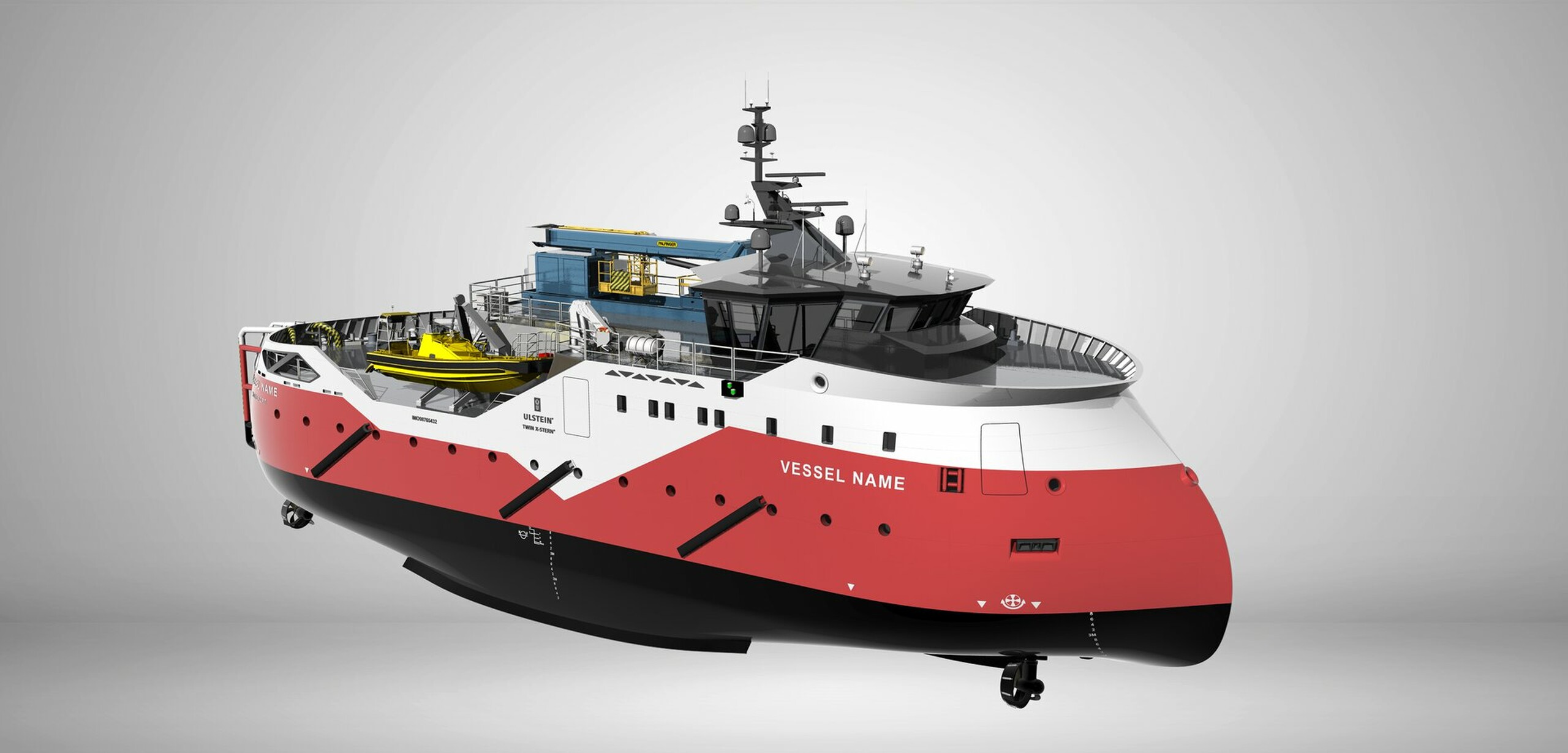
Accommodation:
126POB
Deck area:
500sqm
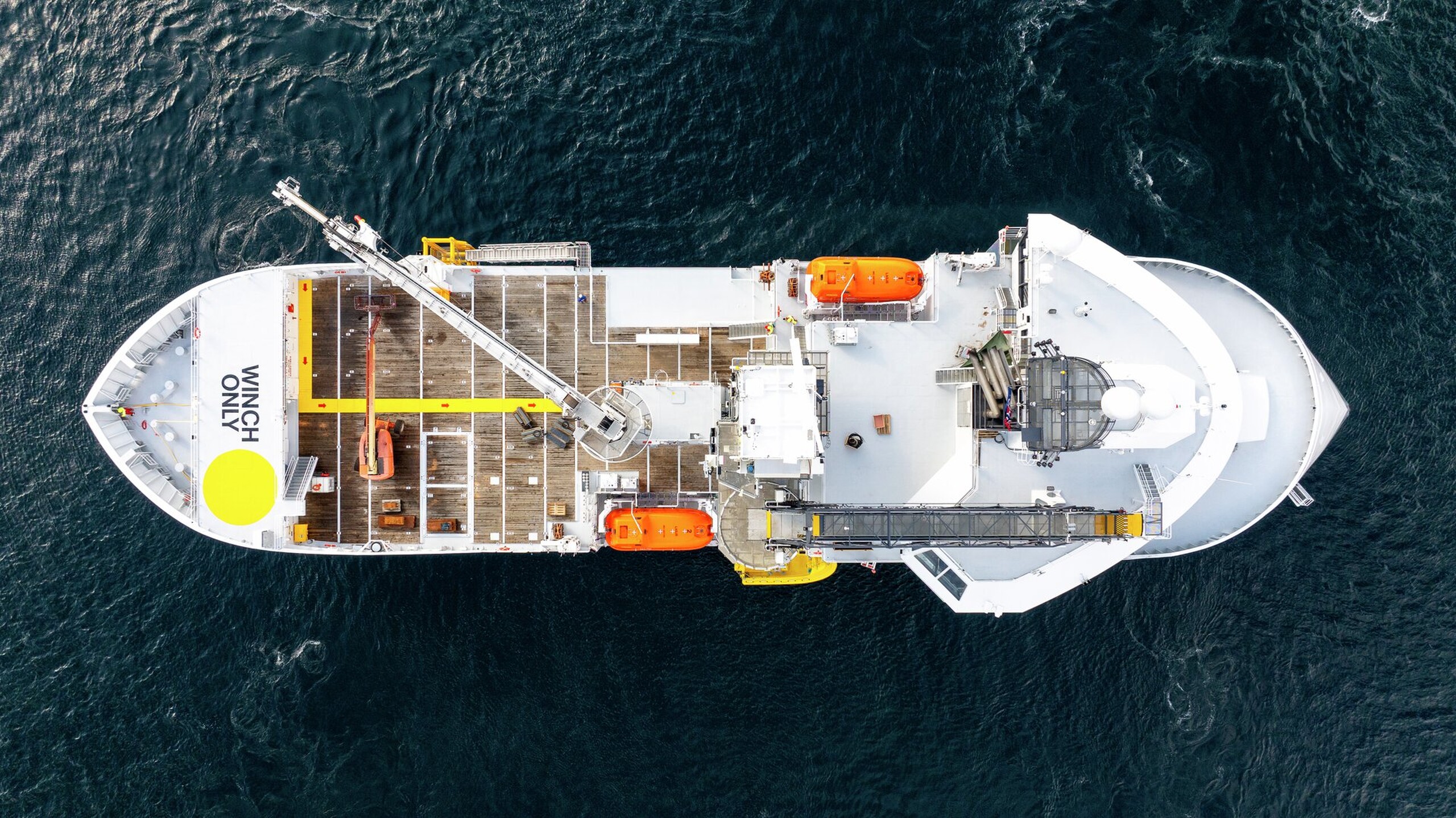
Delays, unsafe transfers and poor vessel access cost offshore wind and oil and gas operators time, money and uptime.
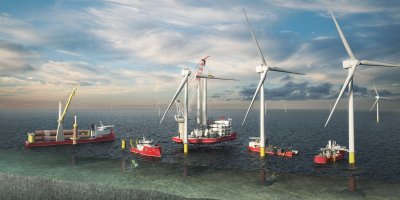
SOVs and CSOVs solve this. Both are purpose-built ships that house technicians offshore and transfer them safely to turbines and installations using a motion-compensated gangway.
Ulstein designs both vessel types for offshore wind and oil and gas, built for walk-to-work operations that keep your people safe and your schedule on track.
Our CSOV and SOV vessels support construction, maintenance and operations across offshore wind and oil and gas projects.
You need a vessel that works from day one. Ulstein is a trusted partner with a strong track record in offshore support vessels.
We guide you from concept to delivery:
Our vessels are built for safe and stable operations:
With Ulstein-designed CSOV/SOVs, you can:
The range includes proven designs featuring key innovations such as the X-BOW® and TWIN X-STERN®, delivering efficient, reliable performance in demanding environments.
Each vessel can be tailored to match specific operational requirements.
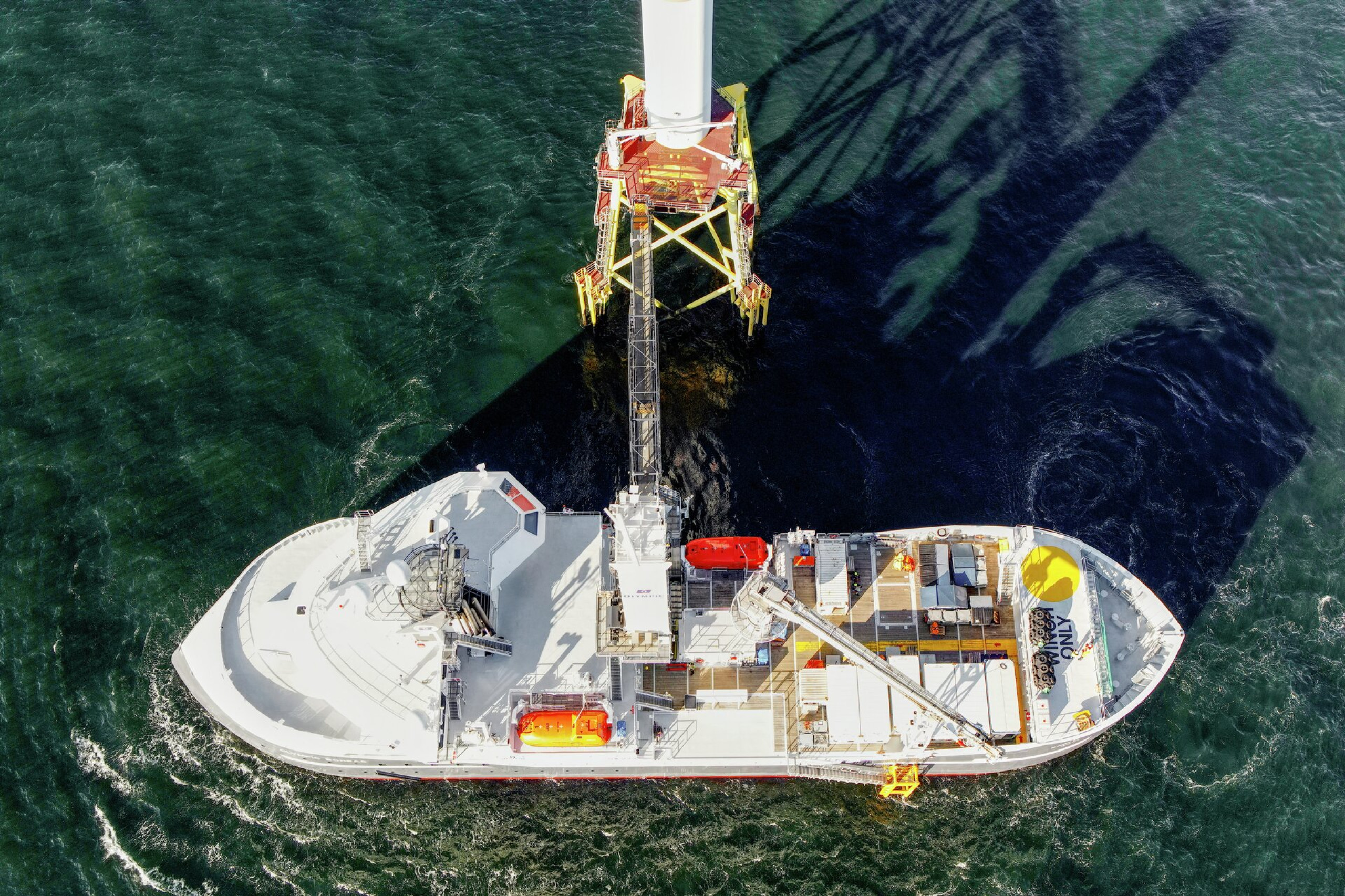
Talk to us about your CSOV/SOV/Walk-to-Work vessel requirements and find the right solution for your offshore fleet.
Operate with confidence using CSOV/SOV/Walk-to-Work designs proven in real-world projects. Ulstein brings decades of experience from offshore wind and oil and gas. Our vessels deliver reliable performance in demanding conditions. Explore our references to see how they perform at sea.
Flexible global shipbuilding
Build where it suits your project. Ulstein supports construction at our yard in Norway or through trusted partner yards worldwide. We guide you from design to delivery, including upgrades and redesign when needed.
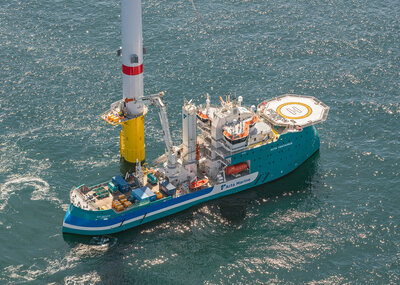
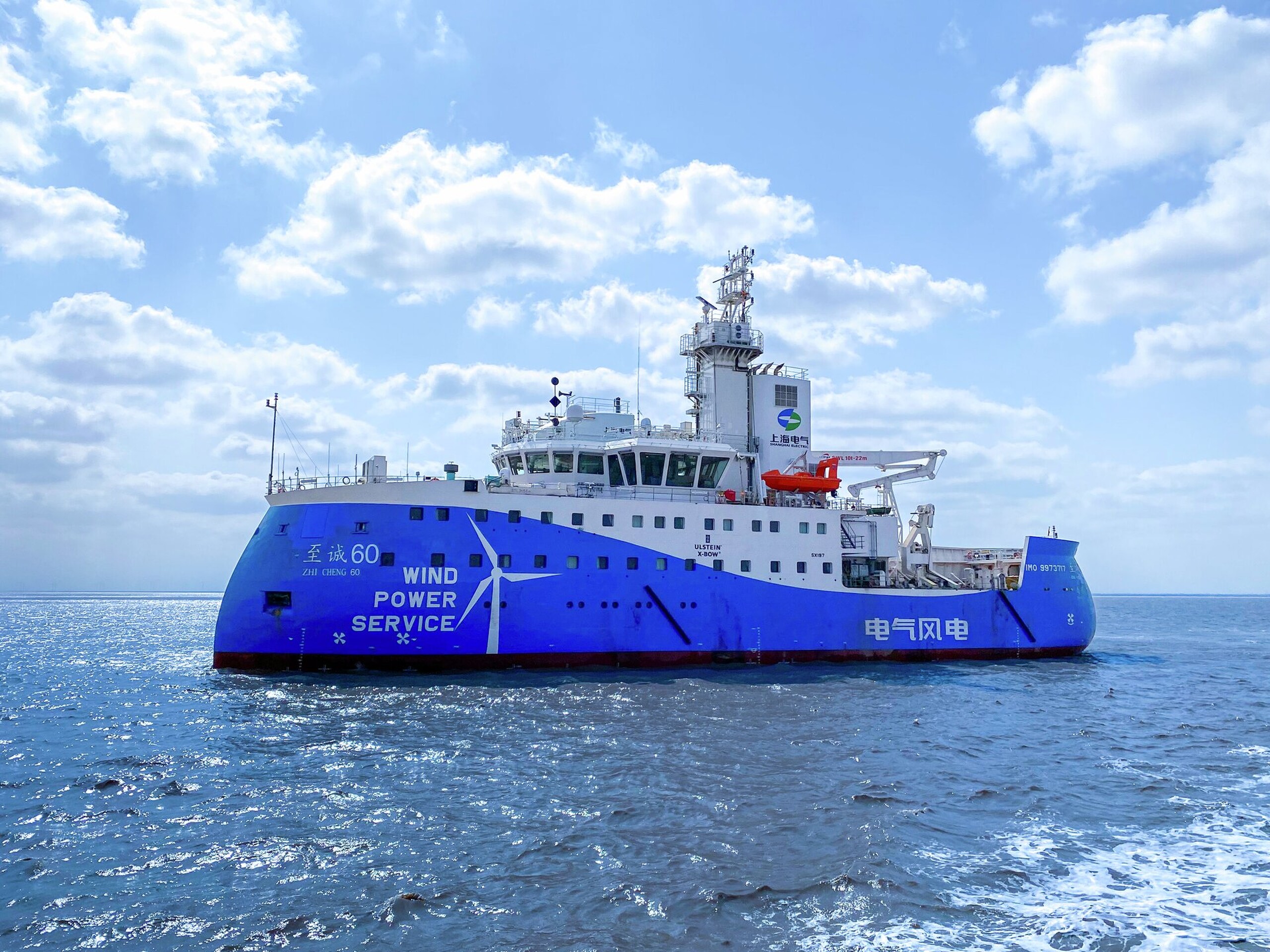
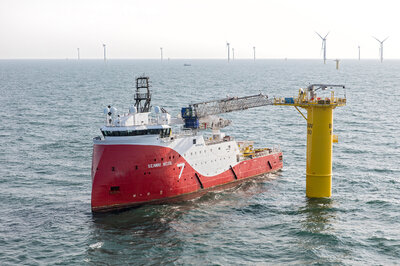
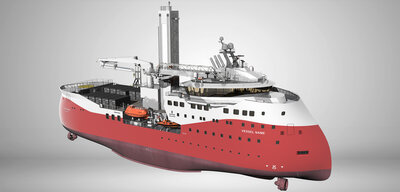
| Name | Yard Number | Built | Owner |
|---|---|---|---|
| 322 | 2026 | Epimetheus GMBH & CO. KG | |
| 319 | 2024 | Olympic | |
| 309 | 2016 | Bernhard Schulte Offshore/ICBC Leasing | |
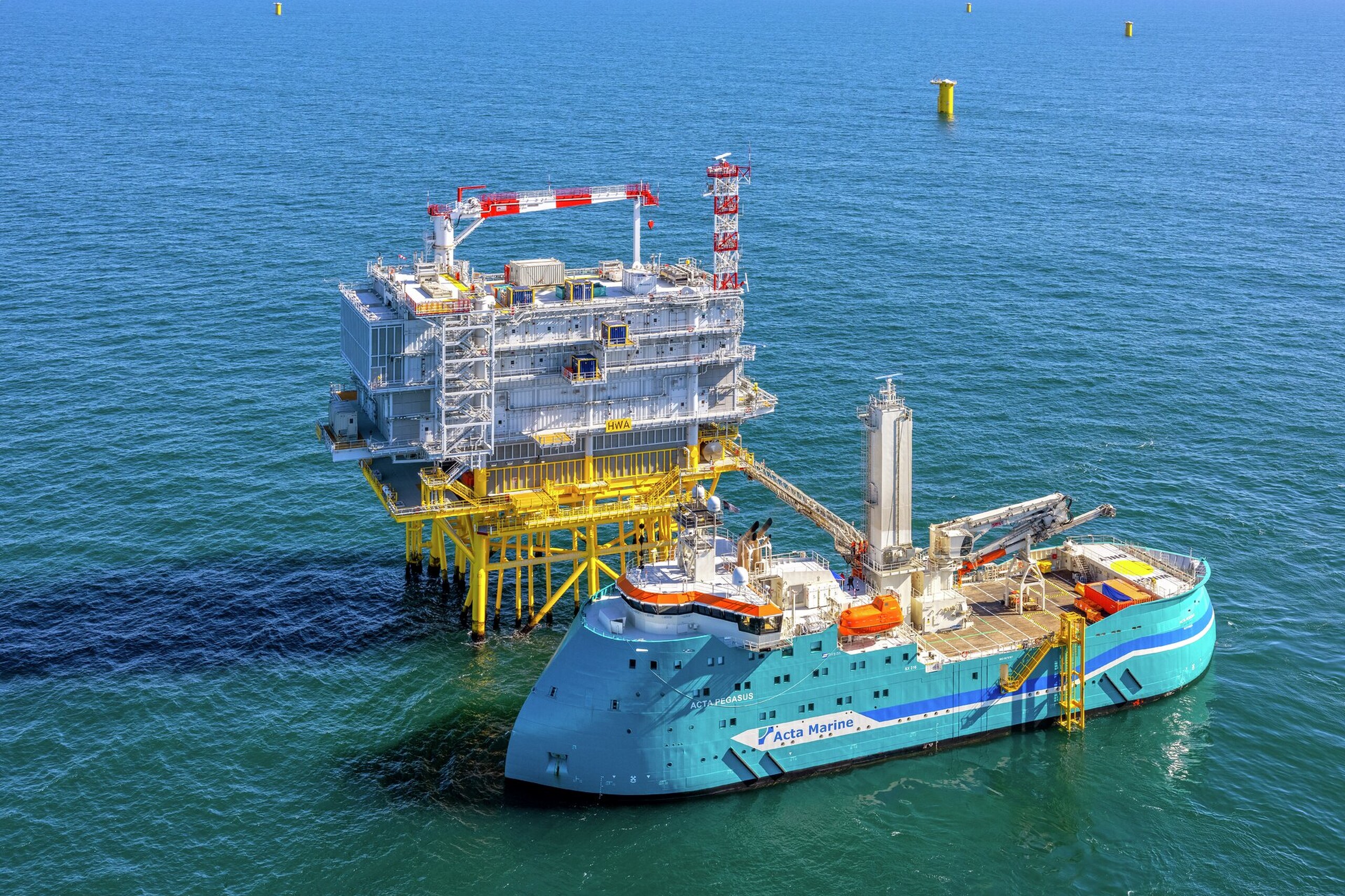
| 2025 | Acta Marine | ||
| 313 | 2019 | Acta Marine B.V. | |
| 2024 | Shanghai Electric Windpower Group | ||
| 2014 | Subsea7 |
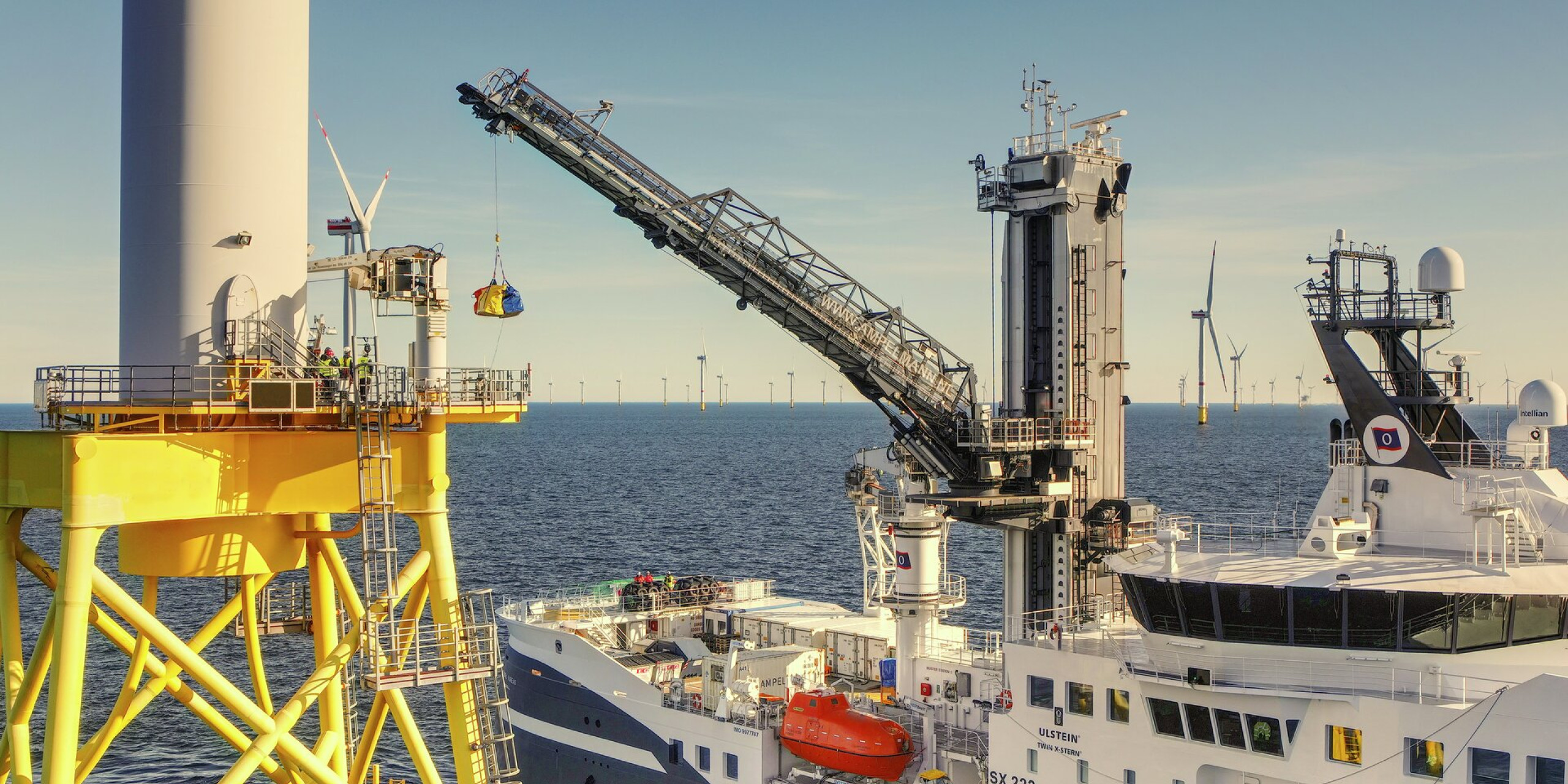
The total number of walk-to-work (w2w) vessel designs and redesigns by Ulstein now counts 23, of which 21 are currently in operation. On average, these vessels perform repair and maintenance on more than 5,000 turbines every year! That makes a stunning 95,000+ gangway connections!
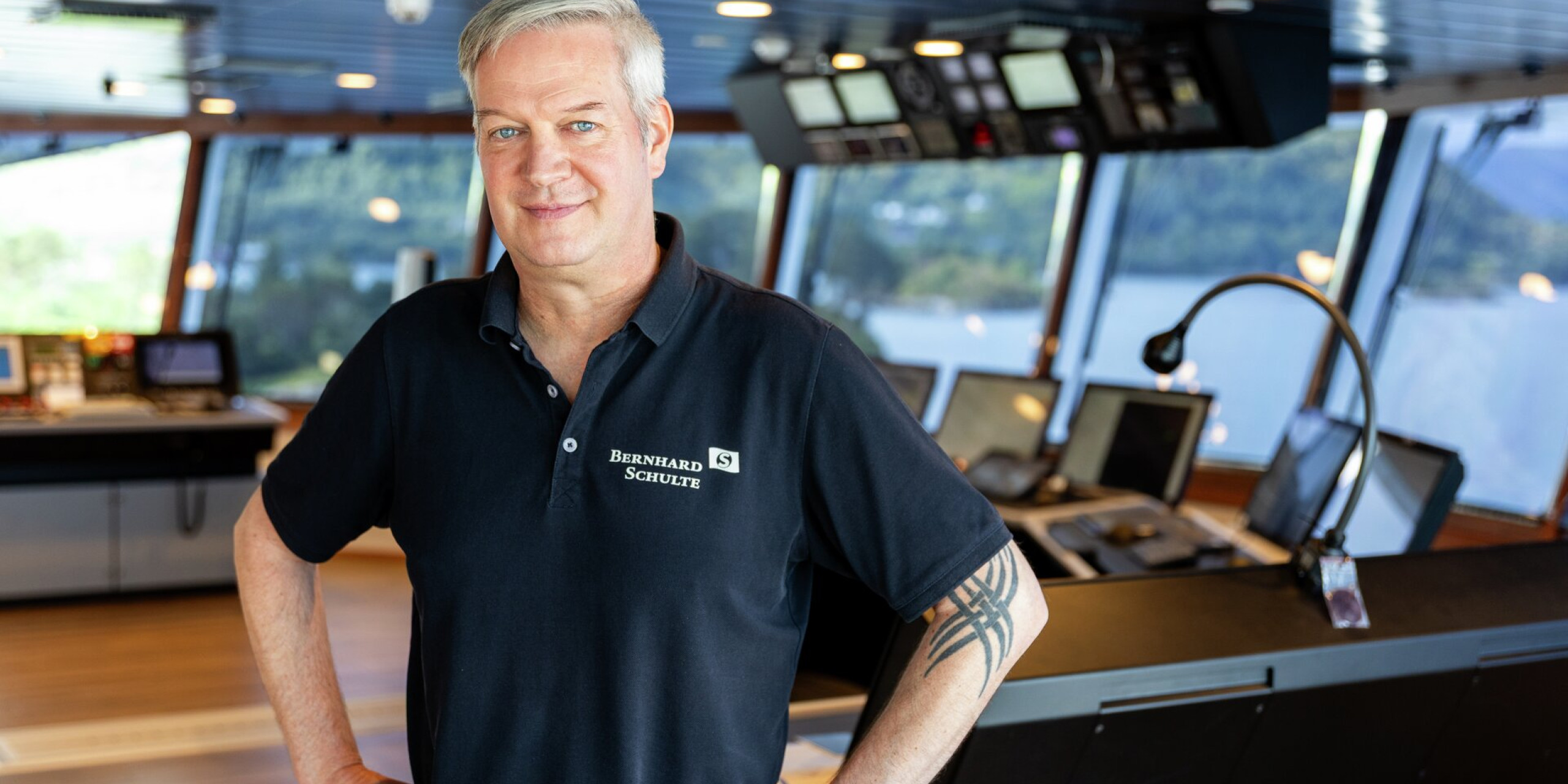
A front-row seat to the TWIN X-STERN® series: Onboard a typical CSOV, the ship's hospital is stocked with seasickness tablets and dry biscuits for technicians unaccustomed to offshore conditions. On Windea Carnot, demand for seasickness remedies is nearly zero. Instead, the three-flavour ice cream machine has become one of the most popular features.
Why vessel operability matters more than ever for reducing LCOE; Vessel uptime has become a critical enabler of project performance.
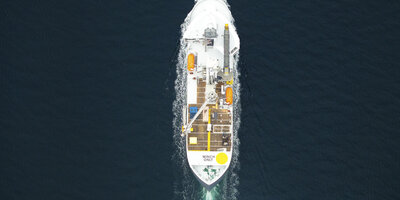
Taking bold commercial risks on novel vessel concepts with a strong focus on sustainability has made Olympic a pioneering player in the offshore energy sector. Its latest investment in a pair of new-build Construction Service Operation Vessels (CSOVs) based on Ulstein Group’s innovative TWIN X-STERN® solution has paid off, with close to 50% reductions in fuel consumption and emissions to boost environmental performance.
A CSOV, or commissioning service operation vessel, is a purpose-built ship that supports the construction, commissioning and maintenance of offshore wind farms. It works as a floating base where technicians live and work through offshore campaigns lasting several weeks. Motion-compensated walk-to-work gangways, cranes and dynamic positioning let technicians transfer to turbines and keep working in higher sea states than smaller craft allow.
An SOV, or service operation vessel, is a purpose-built ship that supports the operation and maintenance of offshore wind farms once they are in production. It stays on field for long periods, housing technicians who transfer daily to turbines using a motion-compensated walk-to-work gangway. Dynamic positioning, onboard workshops and spare part storage keep maintenance work running through the seasons with less reliance on shore.
Both vessels house technicians offshore and use motion-compensated walk-to-work gangways, but they serve different phases. A CSOV supports construction and commissioning, working in campaigns that move with the project and often carrying heavier lifting capacity for component work. An SOV serves wind farms already in production, staying on field under long-term contracts to handle routine maintenance and repairs. In practice the designs overlap, and many owners specify vessels that can do both.
Walk-to-Work means personnel can walk directly from the vessel to an offshore structure, such as a wind turbine, using a motion-compensated gangway. Before this technology, technicians relied on small craft and had to climb ladders, which was limited by wave height. Walk-to-work gangways allow transfers in rougher seas, adding weeks or even months of operational time each year. It is safer, faster and more efficient.
A motion-compensated gangway is a stabilised bridge mounted on a vessel that connects to an offshore structure such as a wind turbine. Sensors continuously measure the vessel's movement in all directions. Hydraulic or electric actuators then adjust the gangway in real time to cancel out that movement, keeping the gangway tip steady against the fixed structure. This allows personnel to walk safely between the vessel and the turbine.
Dynamic positioning (DP) is a computer-controlled system that automatically keeps a vessel in position using its own thrusters. Sensors such as GPS, gyrocompasses and wind sensors continuously monitor the vessel's location and movement. A control computer calculates how much thrust is needed to counteract wind, waves and current, allowing the vessel to maintain its position without anchoring.
Offshore wind operations often require vessels to work close to turbines while personnel, equipment and spare parts are transferred. Dynamic positioning allows the vessel to maintain a precise and stable position despite changing weather and sea conditions. This is essential for safe Walk-to-Work operations, as even small movements can affect the gangway connection. Reliable DP improves safety, increases operational uptime and helps maintenance work continue in a wider range of conditions.
The TWIN X-STERN is Ulstein's patented hull design. Its symmetric hull shape behaves more efficiently in harsh weather conditions. Four azimuth thrusters, two at each end, increase the manouverability. The azimuths have higher efficiency by being capable of turning the thrust directly in the direction of the waves and current. The combination of thrusters and hull design result in lower energy consumption and reduced motions, and therefore higher operability and comfort.
Ulstein has designed or redesigned 23 walk-to-work vessels to date, of which 21 are currently in operation. These vessels collectively service more than 5,000 turbines every year, with over 95,000 gangway connections annually. Ulstein was one of the first movers in this segment, starting with the Seaway Moxie, delivered in 2014.
| Vessel type | Main activities | Accommodation | Crane capacity | Deck area | Transfering technology | Wave conditions |
|---|---|---|---|---|---|---|
| CTV | Long-term operation and maintenance (O&M) contracts of windfarms | 8 to 50 POB | Up to 5 tonnes | 5 to 200 m2 | No gangway | Up to 1,5 m Hs |
| SOV | Long-term operation and maintenance (O&M) contracts of windfarms | 40 to 100 POB | 2 to 20 tonnes | 200 to 500 m2 | Gangway Type 1 | Up to 2,5 m Hs |
| CSOV | Short term O&M contracts and commissioning contracts for windfarms or O&G projects | 90 to 140 POB | 5 to 50 tonnes | 400 to 800 m2 | Gangway Type 1 or 2 | Up to 3,5 m Hs |
| ASV | Short term commissioning contracts for windfarms or O&G projects | 100 to 150 POB | 100 to 150 tonnes | 500 to 1200 m2 | Gangway Type 1 or 2 | Up to 3,5 m Hs |
Long-term operation and maintenance (O&M) contracts of windfarms
8 to 50 POB
Up to 5 tonnes
5 to 200 m2
No gangway
Up to 1,5 m Hs
Long-term operation and maintenance (O&M) contracts of windfarms
40 to 100 POB
2 to 20 tonnes
200 to 500 m2
Gangway Type 1
Up to 2,5 m Hs
Short term O&M contracts and commissioning contracts for windfarms or O&G projects
90 to 140 POB
5 to 50 tonnes
400 to 800 m2
Gangway Type 1 or 2
Up to 3,5 m Hs
Short term commissioning contracts for windfarms or O&G projects
100 to 150 POB
100 to 150 tonnes
500 to 1200 m2
Gangway Type 1 or 2
Up to 3,5 m Hs
Talk to us about your Walk-to-Work vessel requirements and find the right solution for your offshore fleet.