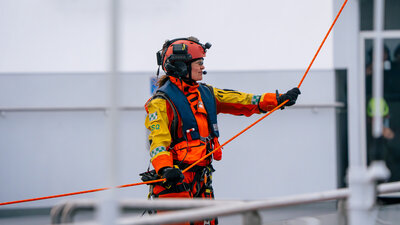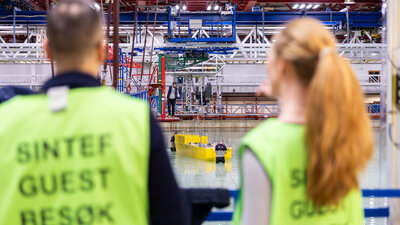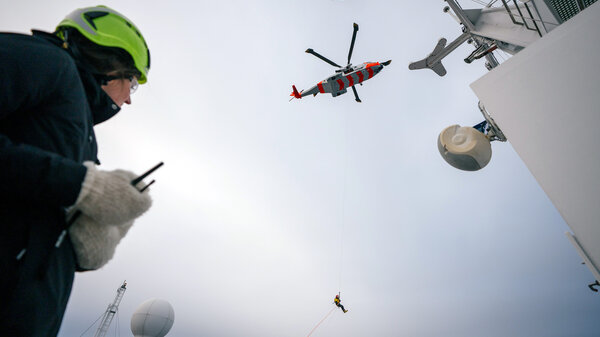
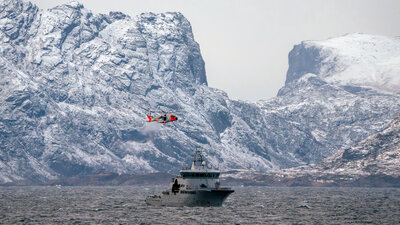
In addition, other players, including the Joint Rescue Coordination Centres, the Norwegian Coastal Administration’s oil spill response unit, and the research foundation SINTEF, participated. HX Expeditions, the operator of MS Spitsbergen, also activated its crisis management team from its London headquarters.
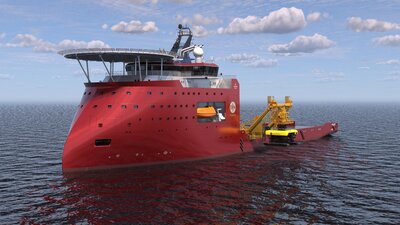
The exercise tested completely new emergency towing technology, involving new methods for transferring the tow line, including the use of a surface drone. This will contribute to increased safety for all vessels operating in Norwegian waters. It is rare for so many relevant stakeholders to take part in a full-scale, realistic exercise.
Each year, between 140 and 170 vessels drift without propulsion along the Norwegian coast.
The causes may include machinery failure, maintenance work, or propeller damage. The risk is that vessels drift towards the coast and run aground, with potentially serious consequences, including pollution, loss of life, or damage to equipment and cargo.
The exercise is part of a larger research project, an Innovation Project for the Industrial Sector (IPN) known as EMTOW (Emergency Towing), funded by the Research Council of Norway. SINTEF has served as the project manager, with Ulstein Design & Solutions AS as the project owner. Terje Våge, Ann Katrin Barstad, Knut Sigve Lillerovde and Børulf Lefdal have played key roles in Ulstein’s EMTOW work.
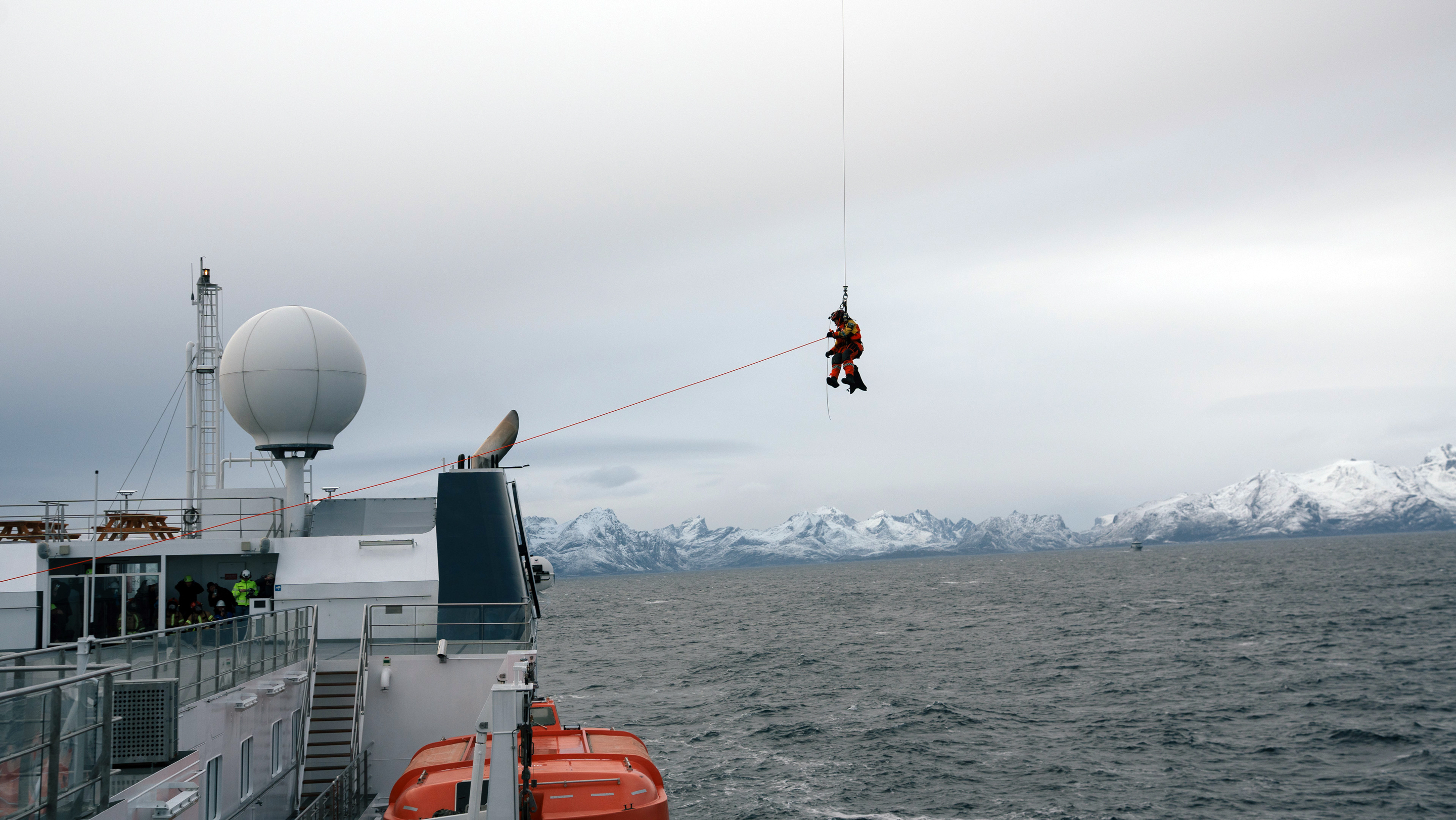
This gives us insight into how emergency towing works under realistic conditions. The experience better equips us to develop solutions that are safe, easy to use and adapted to real crisis situations.