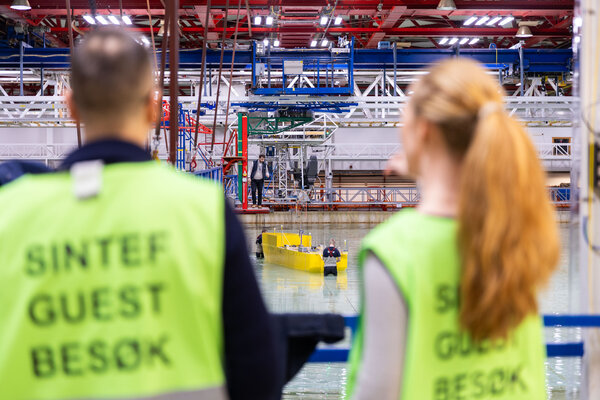
IMG 9692

How Ulstein tested a new cable-laying vessel design

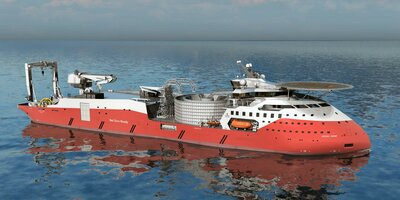
How can you be confident that a new vessel design will actually perform in rough seas and demanding operations? The answer lies in thorough verification, independent testing and documented performance. Recently, a new Ulstein design for a cable-laying vessel was tested in a large-scale ocean basin at SINTEF Ocean. The results delivered exactly what Ulstein seeks: confidence that the design performs as intended.

Physical model testing plays a key role in the quality assurance of new hull designs. Testing carried out by an independent organisation exposes the design to realistic loads under controlled conditions, long before construction begins. At the same time, precise and reliable data are collected, providing a solid basis for further design decisions.
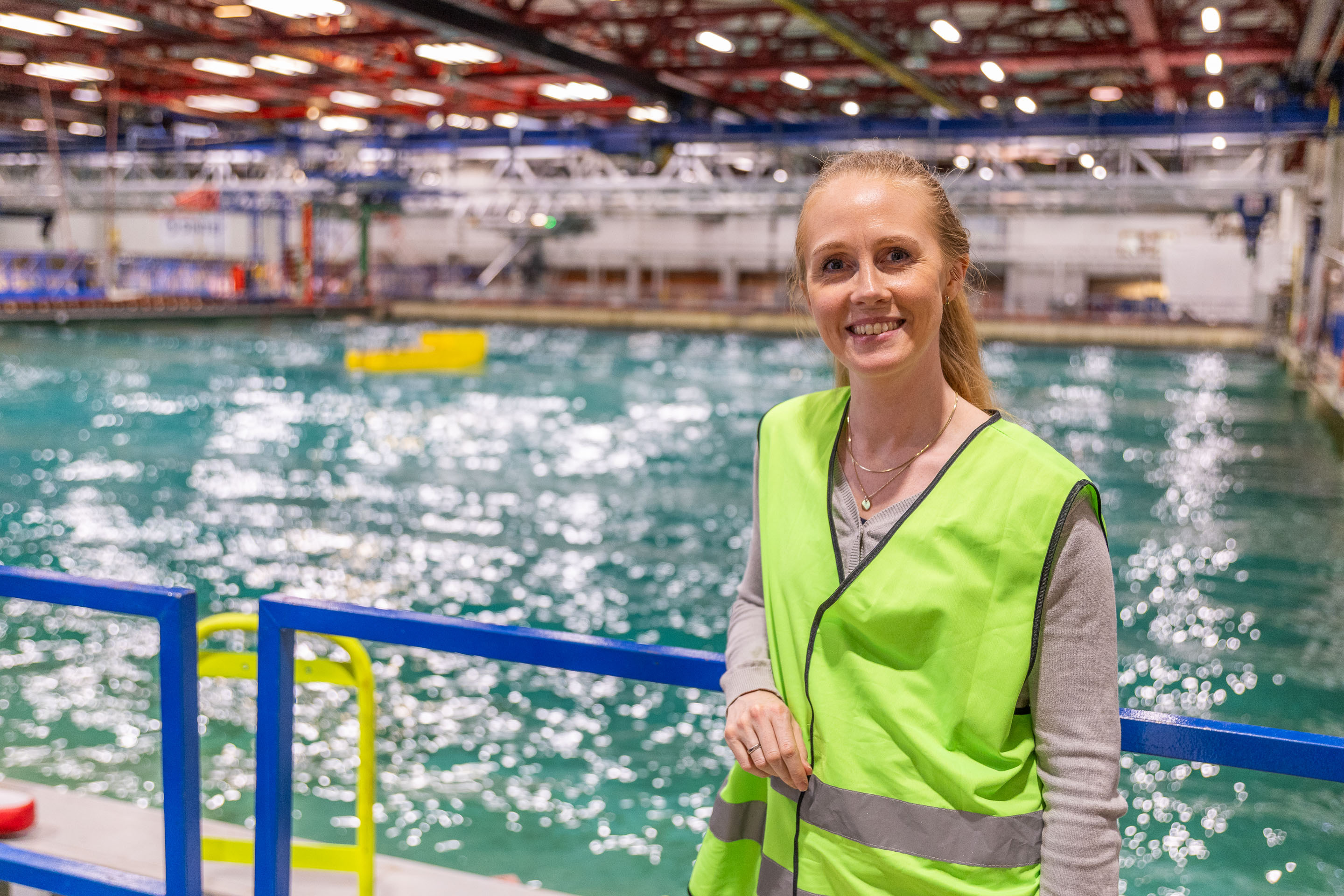
Physical model tests provide insights that are difficult to capture through simulations alone. They give us confidence that the design will perform as expected in real-life operations.

Elisabeth Masdal Hovden, Senior Engineer - Hydrodynamics at Ulstein Design & Solutions AS
Testing that reflects real operations

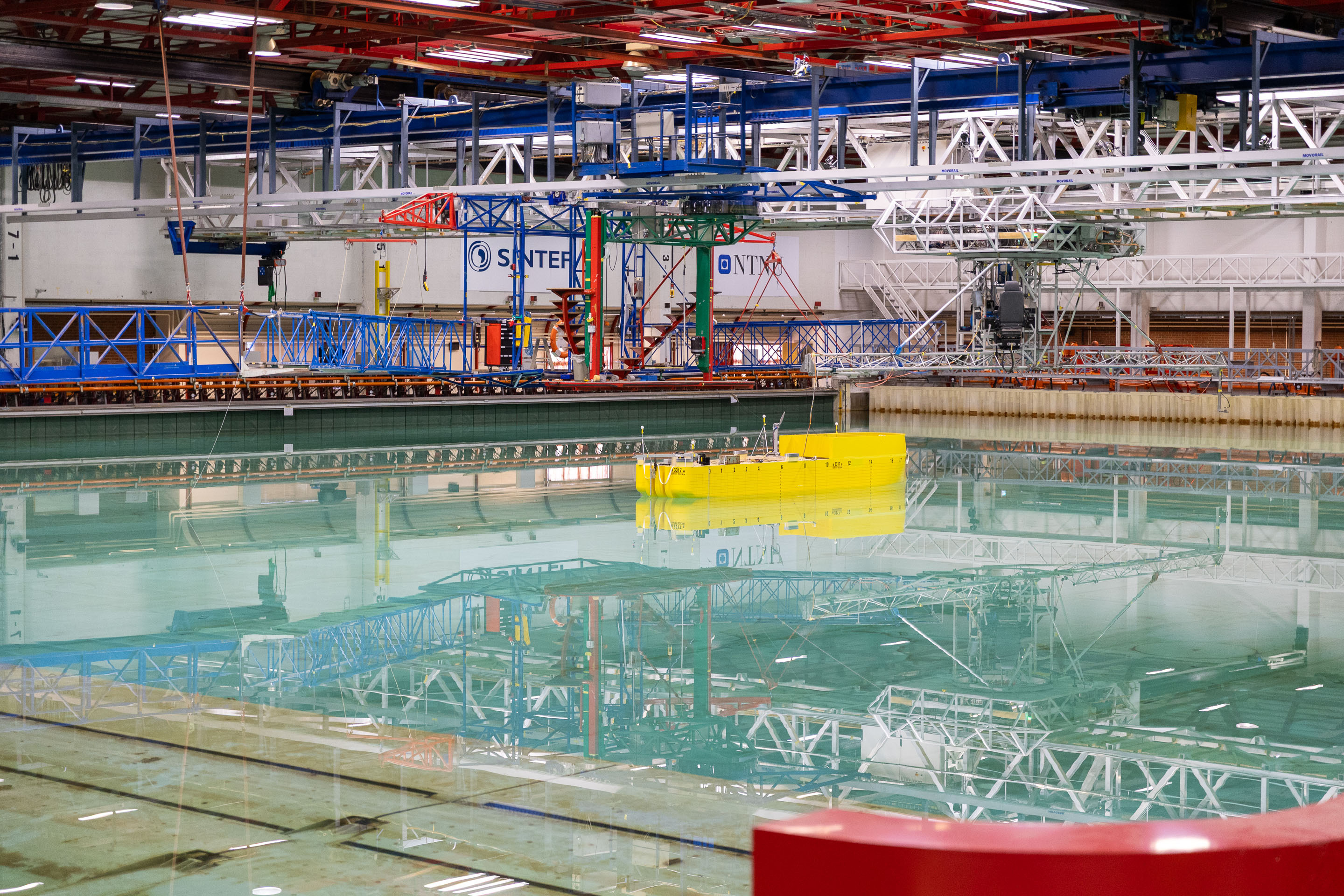
In the ocean basin, waves, wind and current can be reproduced individually or in combination. This makes it possible to study vessel behaviour in conditions that closely resemble the operational environment the vessel is designed for.

The cable-laying vessel design is optimised for low-speed operations, and the tests focused on motions and wave-induced impacts under such conditions, which are critical to precise and safe cable-laying.

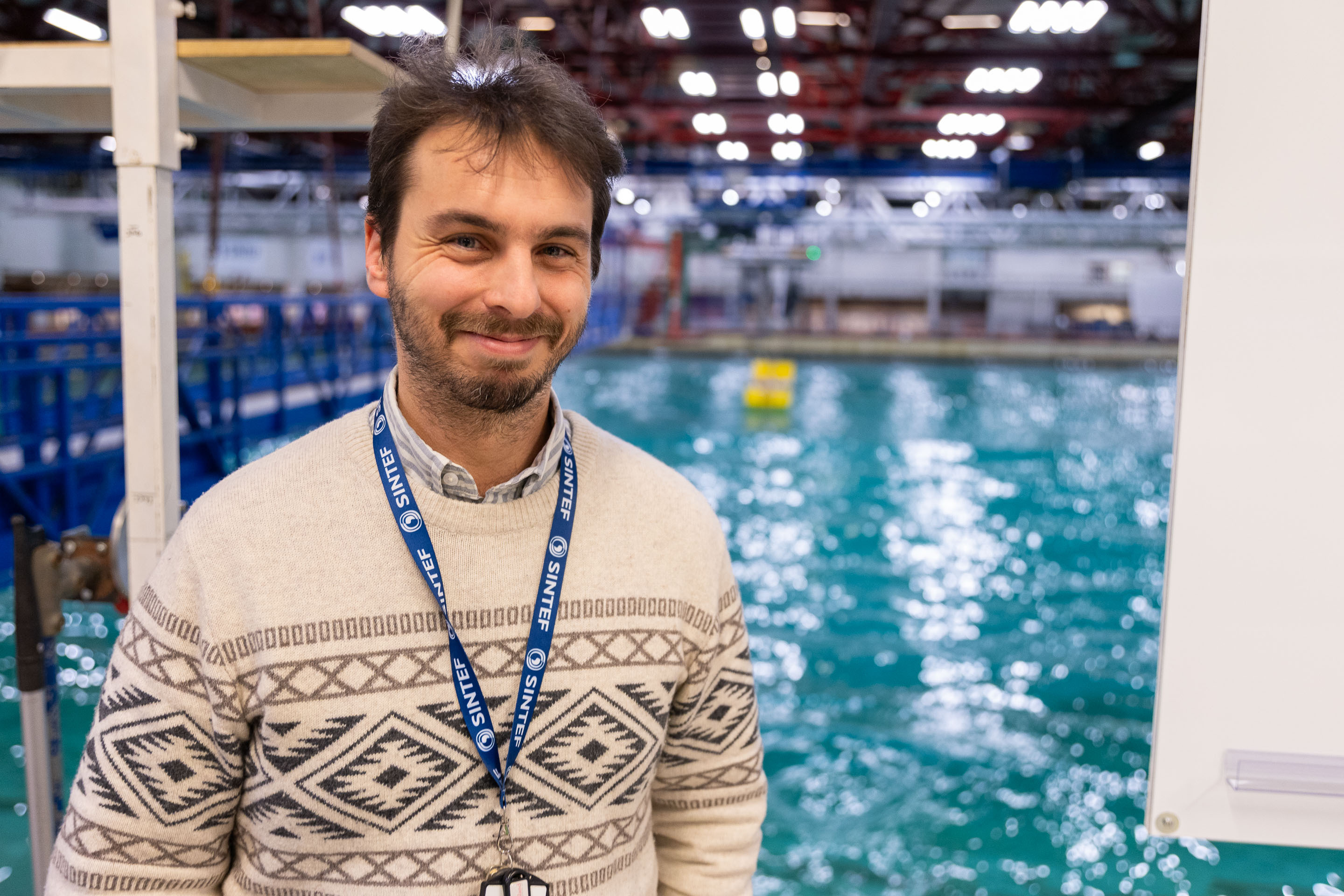
Model testing allows us to document performance, identify potential challenges at an early stage and provide concrete feedback to designers and shipowners.

Marco Nataletti, Research Scientist at SINTEF Ocean

From drawings to measured data

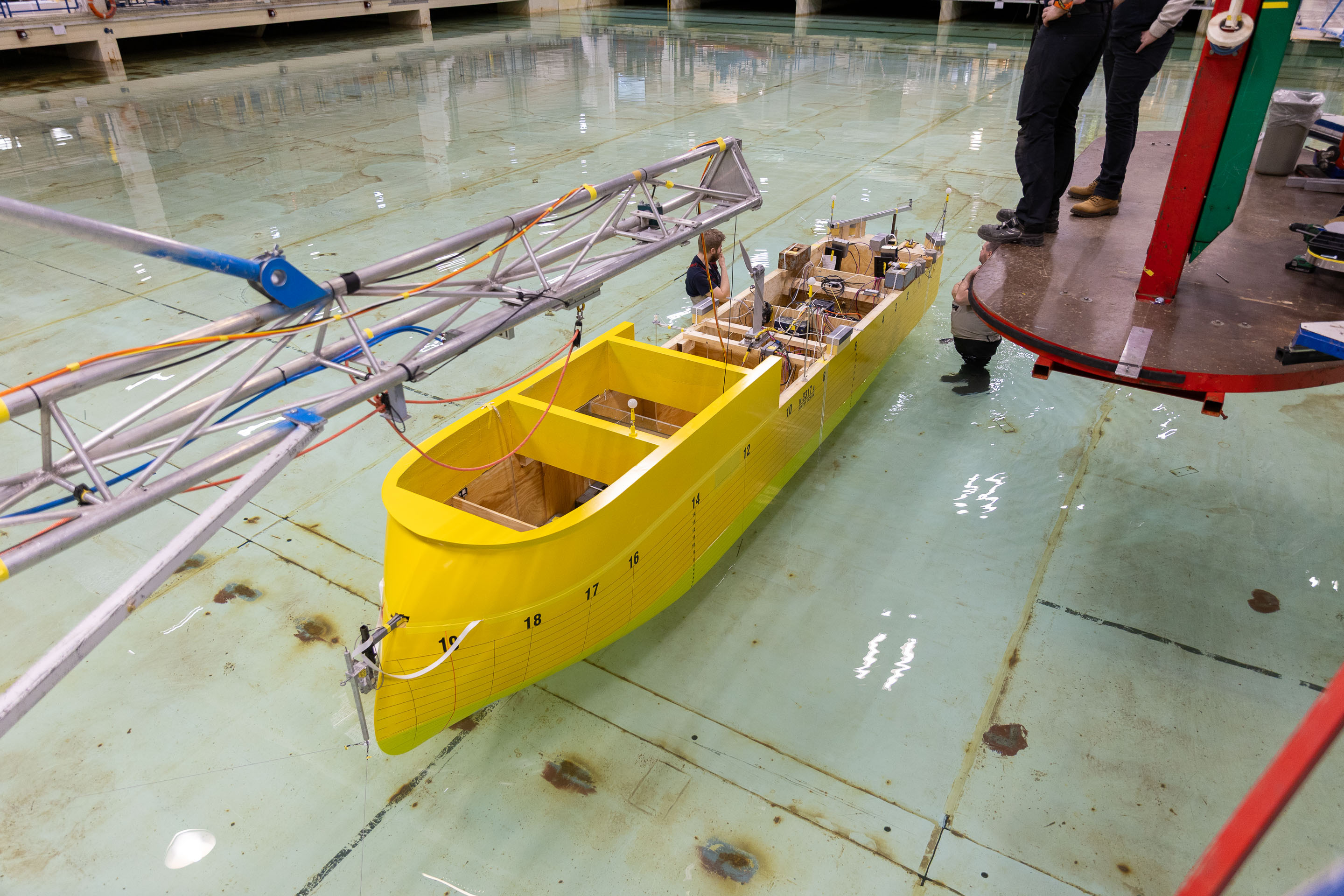
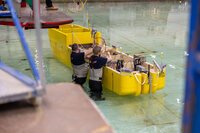
The test model used in the campaign is more than six metres long and was built to replicate the full-scale vessel as accurately as possible. Based on detailed drawings from Ulstein Design & Solutions, the hull form was precision-milled before the model was equipped with propulsion units, thrusters and advanced measurement systems.

Correct mass distribution is essential to obtain reliable results. Weights were therefore positioned to ensure that the model had the same mass properties as the full-scale vessel. Sensors measured, among other things, waves, accelerations, forces and pressures on the hull, while optical tracking recorded all vessel motions with high precision.

IMG 9708

Results without surprises

Testing began in calm conditions before the load was gradually increased. This step-by-step approach ensures stable operation of both the model and the measurement systems, resulting in high-quality data.

“The tests confirmed that the vessel has good seakeeping characteristics. There were no surprises or undesired results,” says Hovden. 

“We achieved both the speed requirements and the bollard pull, and we verified that the roll reduction tanks performed well. The result is very low roll motion.”

  • IMG 9727
  • IMG 9943
  • IMG 9778

Trust is not a feeling; it is the result of documentation

Model testing is about understanding vessel performance, reducing risk and making informed decisions. Independent testing and transparent documentation help meet technical requirements and enable external scrutiny.

The tank testing of this new cable-laying vessel design clearly demonstrates a systematic approach to ensuring that new vessels perform in practice. When designs are verified with facts and measured data, customers and partners have a solid basis for decision-making long before the vessel meets the open sea for the first time.

Get in touch

Runar Muren DSC4429 comp bw

Runar Muren

Description
Managing Director
Affiliation
Ulstein Design & Solutions AS

Latest news

3 D image of the new trenching support vessel Jan De Nul ordered 2 2
Press Release

Jan De Nul contracts Ulstein Design & Solutions AS trenching vessel design
Ulsteinvik, Norway, 10 March 2026  – Jan De Nul has selected a customised vessel design from Ulstein Design & Solutions AS for its latest addition to its offshore fleet. The realisation of the trenching vessel marks a milestone in the collaboration between two leading maritime innovators. The vessel is scheduled for delivery in 2028. The basic design is based on a robust and globally proven subsea vessel design.

010 Yggdrasil Feltillustrasjon Fra Hugin B Sc 01 1920x MO 2
Feature

Yggdrasil defining the future of oil and gas

As offshore oil and gas developments become more complex, operators are rethinking how fields are designed, operated, and supported. For Aker BP, this shift is clearly visible in the Yggdrasil development, the largest ongoing project on the Norwegian Continental Shelf.

Energy
Read more news