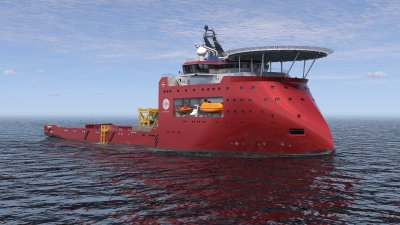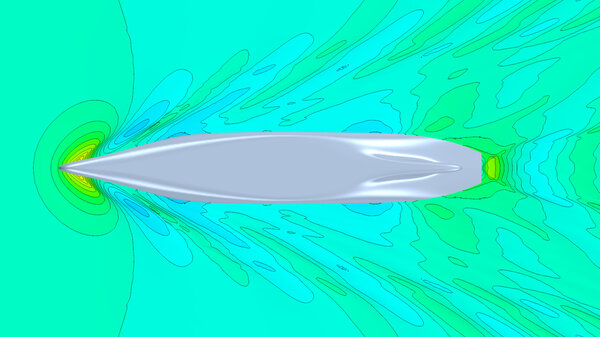
EDGE Navigation and Ulstein recently announced their cooperation on an X-BOW container vessel concept design to facilitate green energy power solutions for fossil-free operations.
The partners are now in the process of evaluating the use of a modular hydrogen fuel cell solution together with ABB and Ballard Power Systems.
"Hydrogen is emerging as the energy carrier of choice across industries so we are happy to collaborate with ABB and Ballard Power Systems for developing a hydrogen fuel cell modular solution to the designs currently being developed by Ulstein Design & Solutions AS. Developing a new efficient design for container vessels incorporating the ULSTEIN X-BOW® will facilitate the transition to green energy propulsion for containerships. At EDGE Navigation we have the ambition to bring economic and scalable non-fossil fuelled containerships to the market by 2025 and with Ulstein's innovative approach we will have the flexibility in design to adapt the vessels to the charterers' choice of fuel," says Jakob Tolstrup-Møller, Managing Director - CEO at EDGE Navigation.
"The commercial shipping share of global greenhouse gas (GHG) emissions has reached about 3%. Declining cost of renewable energy and technology enables us to develop new efficient designs that will facilitate the energy transition in the maritime industry. The paradigm shift in energy used for maritime fuel will be inevitable. Any effort to reduce the global GHG emissions must also include investment into reducing GHG emissions in the global supply chain," states Tolstrup-Møller.
"With the ever-increasing demand for solutions that enable sustainable, responsible shipping, we are confident that hydrogen fuel cells will play an important role in helping the marine industry meet CO2 reduction targets. We are delighted to collaborate with Ulstein and EDGE Navigation to explore the possibilities of powering a sustainable container vessel with an innovative fuel cell solution that ABB is jointly developing with Ballard Power Systems," says Jostein Bogen, Global Product Line Manager for Electric Solutions, ABB Marine & Ports.
Jesper Themsen, CEO of Ballard Fuel Cell Systems Europe A/S noted, "Our PEM fuel cell systems offer a zero-emission solution with a particularly strong value proposition for medium- and heavy-duty motive applications, including marine vessels, buses, trucks and trains. We are excited to work with ABB in addressing requirements of the marine industry, as evidenced by Ulstein and EDGE Navigation's decision to use Ballard's fuel cell system for the X-BOW container vessel following DNV approval of the system".
"In this phase of the concept development for the future, green X-BOW container vessels it is important to cooperate with forward-thinking players," says commercial director at Ulstein Design & Solutions, Lars Ståle Skoge. "We are happy that ABB and Ballard are supporting us at this stage of the project."