Conscious explorations
Whether you are heading for adventurous travels and stays to far-off places, or seeking out the bustling hotspots, what you need is a yacht where you feel comfortable. This includes the lounge and pool areas, the design and overall looks of the vessel, the on-board solutions and toys. The footprint that the vessel leaves in the places that you visit must be reduced to a minimum. Integrating greener solutions is a must in the next era of yachting!
Ulstein maintains a green awareness and has a strong commitment for a cleaner ocean and a cleaner future. We always develop ships with a smaller environmental footprint, implementing technology that support eco-friendliness while maintaining the yachting experience.
X-BOW® - for comfort and fuel reduction
Ulstein has developed vessels for more than one hundred years. Headquartered in Norway and facing the Atlantic Ocean, we are specialised in vessels that can handle rough weather. Comfort is at the top of our minds, which is why we developed our signature ULSTEIN X-BOW®, to reduce the slamming forces and following vibrations from head seas.
Now also for cruising and yachting
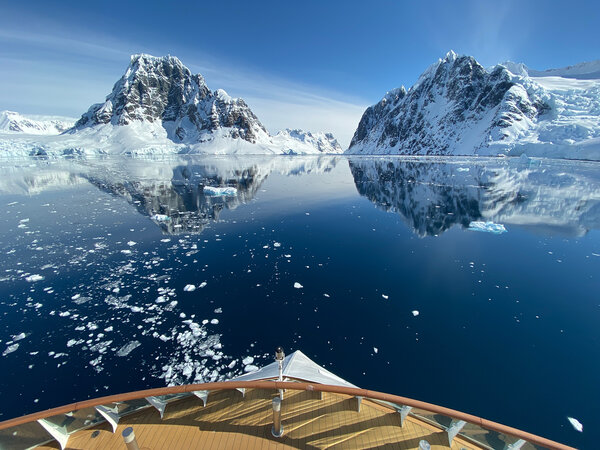
Originally developed for offshore vessels, the bow solution has lately been successfully introduced to yachts and polar cruise vessels. The first X-BOW cruise ship, the 'Greg Mortimer', has since her delivery in 2019, crossed the dreaded Drake Passage between Argentina and the Antarctic numerous times.
'Greg Mortimer' story: Can ship design cure seasickness?
However, there is more to the X-BOW than mere comfort. The reduced resistance also leads to reduced fuel consumption and thus, reduced emissions.
12-hour zero emission travels
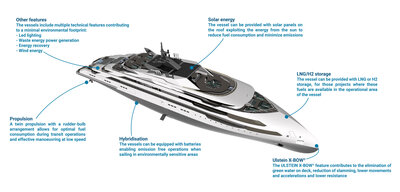
When visiting vulnerable or protected areas particular care must be taken. Ulstein provides the ULSTEIN ZED solution in which emissions are diminished, and even locally eliminated, for day tours. This can be done through an overall reduction in energy consumption, storage of energy while on the move, and use of renewable energy sources. Alternative fuels such as biofuels, natural gas (LNG) or hydrogen, and cleaner energy sources such as solar or wind energy can help to reduce emissions. Other smart ways of improving the environmental footprint include LED lighting, waste energy power generation and energy recovery. Read about how we have implemented the ULSTEIN ZED solution on a cruise vessel.
Propulsion
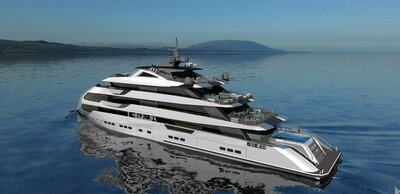
The latest developments in propulsion have also focused even more on greener solutions. On the Ulstein yachts we introduce a twin propulsion with a rudder-bulb arrangement, allowing for optimal fuel consumption during transit operations and effective manoeuvring at low speeds.
All Ulstein yachts are based on our high-quality, Norwegian design philosophy and workmanship: Turning visions into reality.