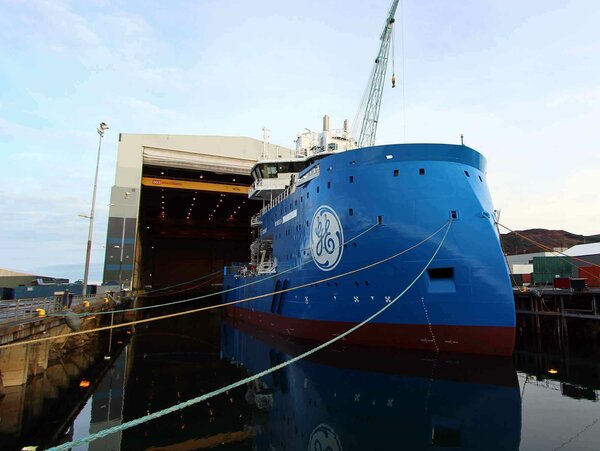
Windea TBN yno 315 at Ulstein Verft

Out from the shadows - Offshore wind vessel floated out

The next Service Operation Vessel (SOV) for Bernhard Schulte, Yard Number 315 at Ulstein Verft, was floated out from the yard’s dock hall on Sunday afternoon, 26 January 2020. The hybrid vessel has now been positioned in the outer dock for further outfitting and testing.

The painting of the vessel's exterior was completed prior to the float-out. The commissioning stage of the project is ongoing, the switchboards have been powered up and main engines started. Also, the provision crane has been tested and testing of the davits have commenced. The inclining test is scheduled in the last part of February.
 

The vessel is equipped with a battery hybrid system: The Energy Management System has recently been presented to the Shipowner's representatives.

The X-BOW® and X-STERN® innovations improve seakeeping and safety while reducing fuel consumption.

The vessel will stay in the outer dock for some time, and later the vessel will be moved to the outfitting quay. Sea trial is scheduled to start early March.

The Yno 315 is Ulstein's third offshore wind vessel for Bernhard Schulte, the other two being Windea La Cour and Windea Leibniz.
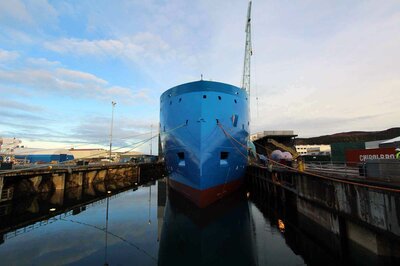
Windea TBN front view

Latest news

3 D image of the new trenching support vessel Jan De Nul ordered 2 2
Press Release

Jan De Nul contracts Ulstein Design & Solutions AS trenching vessel design

Ulsteinvik, Norway, 10 March 2026  – Jan De Nul has selected a customised vessel design from Ulstein Design & Solutions AS for its latest addition to its offshore fleet. The realisation of the trenching vessel marks a milestone in the collaboration between two leading maritime innovators. The vessel is scheduled for delivery in 2028. The basic design is based on a robust and globally proven subsea vessel design.

010 Yggdrasil Feltillustrasjon Fra Hugin B Sc 01 1920x MO 2
Feature

Yggdrasil defining the future of oil and gas

As offshore oil and gas developments become more complex, operators are rethinking how fields are designed, operated, and supported. For Aker BP, this shift is clearly visible in the Yggdrasil development, the largest ongoing project on the Norwegian Continental Shelf.

Energy